Volusia County · Coastal
Ormond Beach Waterfront Homes
The quieter, leafier neighbor of Daytona, Ormond Beach pairs Atlantic oceanfront with historic Halifax River estates, oak-canopy drives, and a settled feel rooted in deep history.
Once a winter retreat for Gilded Age industrialists, Ormond Beach has kept a quieter, leafier, more residential character than neighboring Daytona. It's a strong pick for oceanfront or Intracoastal living with a settled, historic feel, roughly 75 to 90 minutes from Orlando. Between its grand oak-shaded river streets and its quiet beaches, it offers a sense of permanence and place that's increasingly rare on the Florida coast.
A town with deep roots
Ormond Beach's history runs deeper than most Florida beach towns. It drew wealthy Northerners in the late 1800s — the Rockefeller winter home, The Casements, still stands as a museum and cultural center — and it was a birthplace of early automobile racing on the hard-packed sand, long before the Speedway moved south to Daytona. That heritage shows in the town's bones: mature live oaks, established neighborhoods, riverfront estates, and a cultural life that includes art museums and gardens. It feels lived-in and cared-for in a way that newer coastal developments can't replicate.
What waterfront living feels like here
Daily life in Ormond bends toward calm and the outdoors. The barrier island offers quiet beaches; the Halifax River offers sunsets, docks, and protected boating; and the oak-canopy drives invite slow exploration. The pace is residential and unhurried, with golf, riverfront parks, and the natural wild of Tomoka State Park close at hand. It's a place that suits people who want coastal living with history, greenery, and room to breathe rather than a resort scene.
Two waterfronts: ocean and river
Like its neighbors, Ormond gives buyers an ocean-versus-river choice — but the river side here is especially distinctive. Oceanfront homes and condos face the Atlantic with direct beach access and the most exposure. Riverfront homes along the Halifax River — particularly the grand, oak-shaded estate streets — offer protected boating, deep-water docks, sunsets over the water, and some of the area's most coveted addresses. To the north, the Tomoka River and state park add a wild, scenic stretch of natural water. For many buyers, the historic riverfront is the heart of Ormond's appeal.
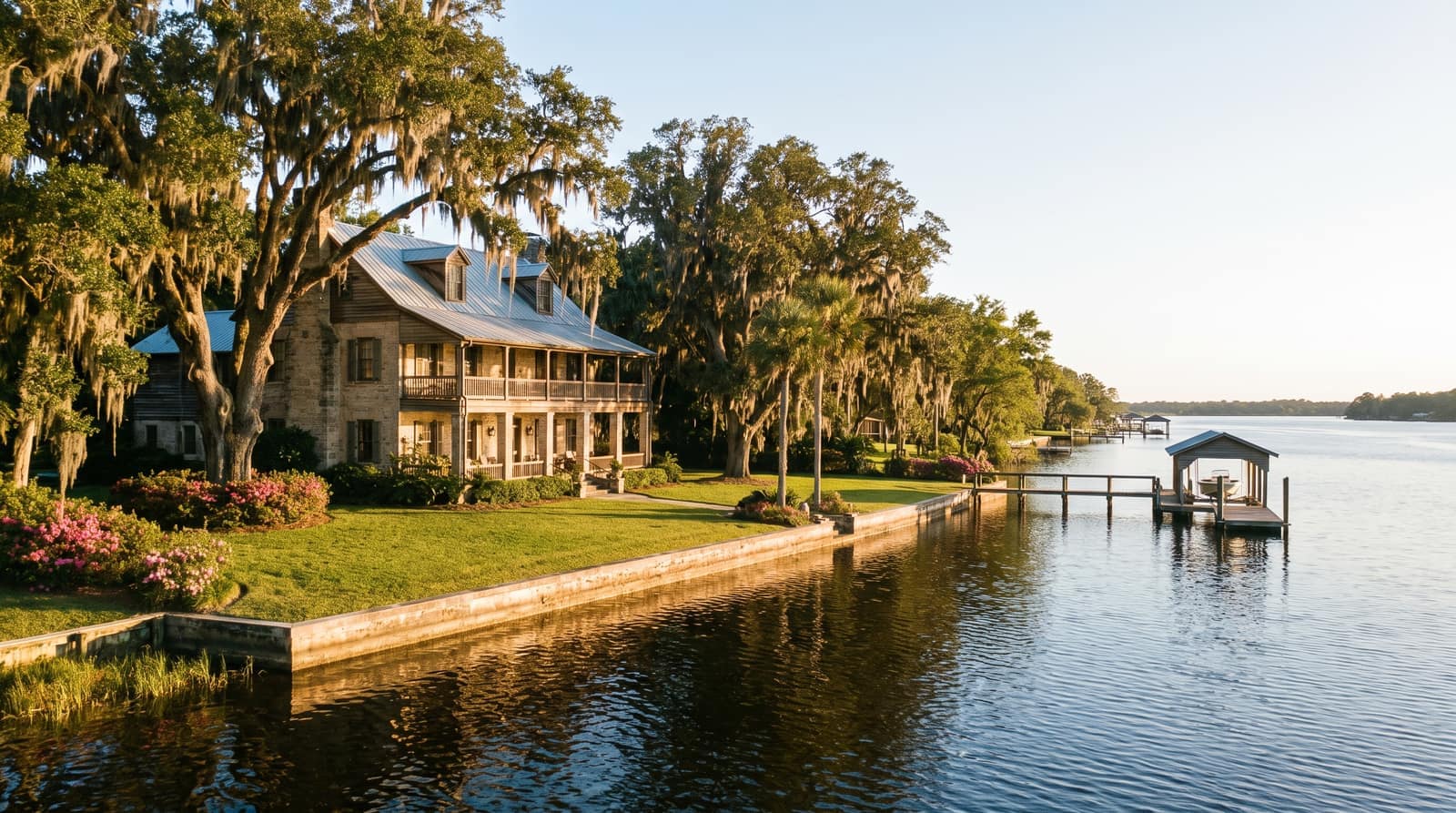 Historic riverfront estates among live oaks line the Halifax — the area's most distinctive homes, often with deep-water dockage.
Neighborhoods and where the homes are
Ormond's housing spans the island and the riverfront in a satisfying range.
The oceanfront holds beach homes and condos along the Atlantic, with the narrow Ormond-by-the-Sea strip extending north. The Halifax River estate streets — shaded by enormous live oaks — are the signature, lined with historic and grand riverfront homes with private docks. Inland of the river, mature, leafy neighborhoods offer established single-family homes, and newer custom estates appear along the water. The mix of genuine historic homes, mid-century houses, and new builds gives the market unusual depth for a town this size.
Property types and what to expect
Expect oceanfront homes and condos, riverfront homes with docks, historic and mid-century homes, and custom estates. Ormond's distinguishing feature is its stock of established, character-rich riverfront and oak-shaded homes — properties you simply can't find in newer coastal communities. As everywhere on the coast, which water a home fronts, its elevation, and its condition drive value, and historic homes warrant especially careful inspection.
This guide isn't a brokerage, and prices change constantly, so we won't quote figures. Use the listing links at the bottom of the page for current asking prices, and confirm anything specific with the listing agent or a licensed local professional.
The Loop, the parks, and the arts
Ormond's defining experience is the Ormond Scenic Loop — a drive through cathedral-like tunnels of live oak along the Halifax and Tomoka rivers, out past Tomoka State Park where the Tomoka meets the Halifax, and back along the coast. It's one of Florida's most beautiful drives and a window into what the area protects. Add the Casements, the Ormond Memorial Art Museum and Gardens, riverfront parks, and golf, and you have a town with real cultural and natural depth. Daytona's full amenities — and the Speedway — are a short drive south.
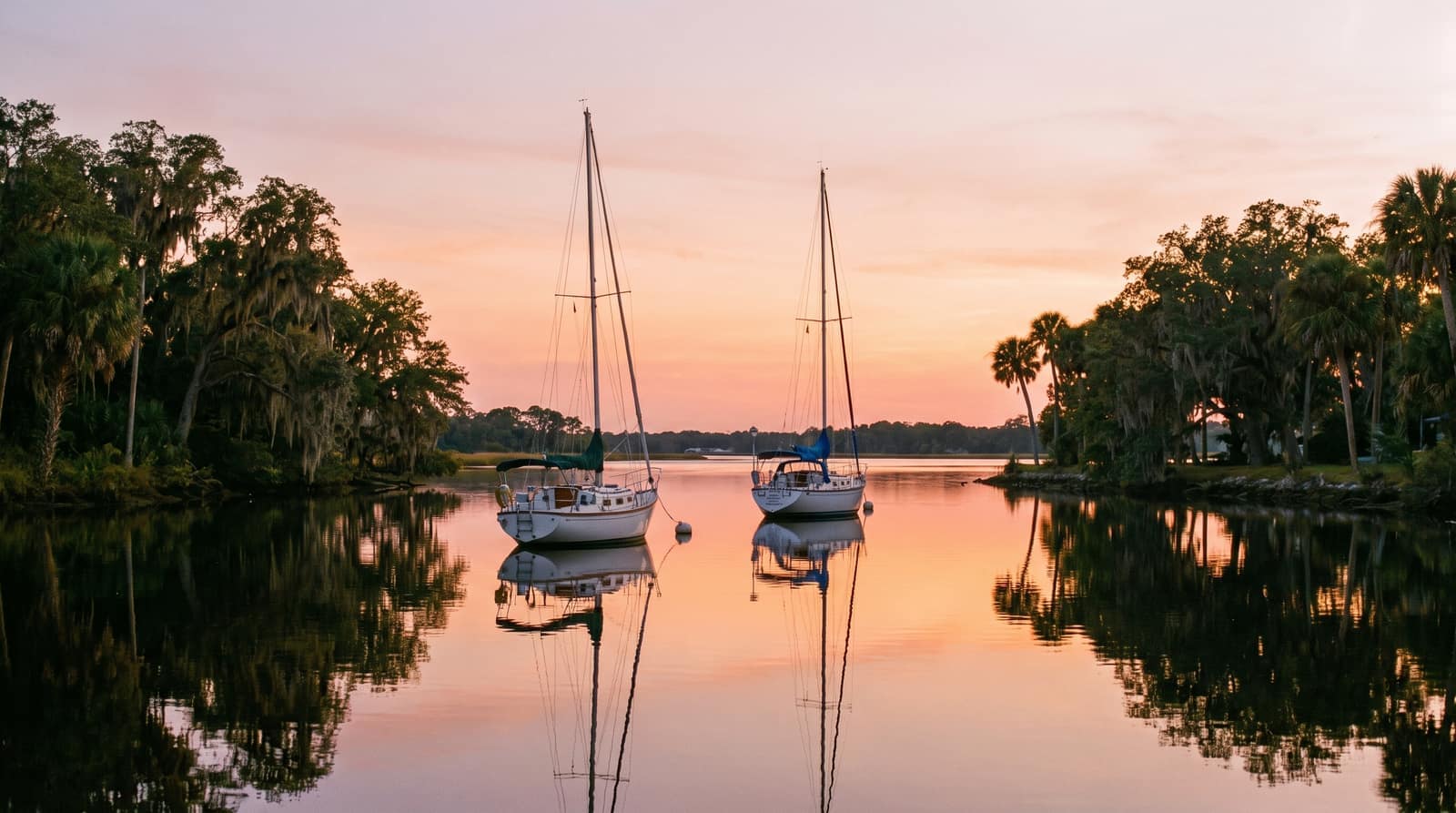 The Halifax River offers some of the area's best protected boating, with sunsets over the water.
The Casements and the Gilded Age legacy
Ormond's history as a winter resort for the wealthy is still woven through the town. In the late 1800s and early 1900s, the grand Ormond Hotel drew industrialists and tycoons to the banks of the Halifax — among them John D. Rockefeller, who liked the area so much he bought a home across the street. That home, The Casements, survives as a museum and cultural center and is one of the town's defining landmarks; Rockefeller's habit of handing out dimes to visitors here became local legend. The grand hotel itself is gone, demolished in the 1990s, but the era it represented shaped Ormond's enduring character: substantial homes, mature landscaping, and a sense that this was a place built for people who could live anywhere and chose the quiet beauty of the Halifax. It's also, with neighboring Daytona, a "Birthplace of Speed" — the hard-packed sand hosted some of the earliest automobile speed trials in the early 1900s, a heritage the town still celebrates.
The Scenic Loop, Tomoka, and the wild north
North of town, the landscape turns wild and historic, and it's one of Ormond's great assets. The celebrated Ormond Scenic Loop and Trail winds for miles beneath cathedral-like canopies of live oak along the Halifax and Tomoka rivers and out to the coast. It threads past Tomoka State Park, at the confluence of the Tomoka and Halifax rivers, where Timucuan people once lived and where manatees, kayakers, and anglers now gather. Nearby, Bulow Creek State Park protects the Fairchild Oak, one of the oldest and largest live oaks in the South, and the Bulow Plantation Ruins preserve the remains of a 19th-century sugar plantation. For residents, this means genuine wilderness and history minutes from home — a rare counterpoint to the developed coast, and a big part of why the area feels so green and grounded.
Riverfront estates and the John Anderson corridor
Ormond's signature homes line the Halifax River, and the most storied address is John Anderson Drive — an oak-canopied road that runs along the water past gracious riverfront estates, many with deep-water docks. This is where the town's Gilded Age sensibility lives on: large lots, mature trees draped in Spanish moss, and homes oriented to capture the river and its sunsets. The Halifax here is wide and protected, ideal for sailing and cruising, with access via the Intracoastal up and down the coast. For buyers drawn to character and water, these riverfront corridors are the heart of Ormond's appeal — and the reason many people choose the river side over the oceanfront entirely.
Dining, the arts, and beachside Granada
Ormond pairs its natural and historic depth with a comfortable everyday scene. The Ormond Memorial Art Museum and Gardens and the Casements gardens anchor a real arts-and-culture presence, while the beachside Granada Boulevard corridor offers restaurants, shops, and easy beach access. Golf is well represented, riverfront parks dot the Halifax, and the dining ranges from casual beachside spots to riverfront tables — with the full slate of Daytona's amenities a short drive south. It's a town that rewards slow exploration: a morning on the Loop, an afternoon on the river, dinner near the beach.
The rhythm of the year
Ormond's seasons mirror the wider Daytona area, filtered through its quieter character. Winter is mild and draws seasonal residents; the region's marquee events — the Daytona 500 in February, Bike Week in early spring, Biketoberfest in fall — bring energy and crowds just to the south, easily enjoyed or avoided from Ormond's calmer streets. Summer is hot and humid with afternoon storms, and hurricane season from June through November is the period every coastal buyer should plan around. Through all of it, Ormond's leafy, residential character holds steady — which is precisely what draws people who want the coast without the commotion.
Who lives here, and the pace of life
Ormond Beach skews toward buyers who want a settled, established coastal life rather than a resort scene. It's a genuine year-round community — families in the leafy mainland and beachside neighborhoods, professionals commuting to the wider Daytona area, and a substantial population of retirees and second-home owners drawn to the riverfront estates and the quiet. The town's deep history and mature character attract people who value permanence: many homes have been in families for years, and the riverfront and oak-canopy streets have a stability that newer coastal developments lack. It's also a town that takes its parks, arts, and natural areas seriously, which shapes a community oriented toward the outdoors and culture over nightlife. For a buyer, that means Ormond functions as a real, rooted place with neighbors and traditions — close enough to Daytona's energy to enjoy it, far enough in feel to leave it behind at the end of the day.
Getting there and day-to-day
Ormond Beach is roughly 75 to 90 minutes from Orlando via I-4 and I-95, with Daytona Beach International Airport just south. Everyday shopping, dining, and services are well established locally, and the larger Daytona area is minutes away — so Ormond stays quiet while keeping full amenities close. It works equally well as a full-time home or a seasonal retreat.
Buying a coastal home here: what to check
Coastal buying carries considerations inland lakefront doesn't, plus a few specific to Ormond's older stock:
- Historic-home condition. Many of the most appealing homes are decades to a century old. Budget for a thorough inspection of systems, roofing, foundations, and any prior storm repairs.
- Ocean exposure and elevation. For oceanfront homes, confirm elevation, dune protection, and storm history.
- River dockage. For riverfront estates, confirm dock permits, depth, and seawall condition — older seawalls can be a significant future cost.
- Wind and flood insurance. Get real quotes early; coverage is significant and varies by location and elevation. Our waterfront maintenance guide covers the upkeep salt air and water add.
Insurance, storms, and maintenance
Plan for barrier-island and riverfront realities: wind and flood insurance, salt-air maintenance, and a clear view of hurricane and surge exposure. Historic and riverfront homes carry their own upkeep — older systems, mature trees, docks, and seawalls — that belongs in your budget from the start.
Who Ormond Beach suits
Ormond Beach rewards buyers who want coastal living with history, greenery, and a settled, residential calm — especially those drawn to the grand, oak-shaded riverfront estates that set the town apart. It's a natural fit for buyers who value character and quiet over resort energy, and who want both quick beach access and protected river boating.
As always, the details that matter most — exact frontage, elevation, dock and seawall condition, insurance costs, condition, price, and availability — are specific to each home and change quickly. Use the links below to see what's currently on the market, and verify everything with the listing agent, broker, or another licensed professional before you rely on it.
Browse Ormond Beach listings
Search current waterfront homes on these third-party sites:
Links go to external sites. Lakeshore & Coast is not a brokerage — confirm all details with the listing agent or broker.
Ormond Beach: common questions
How is Ormond Beach different from Daytona Beach?
Ormond is generally quieter and more residential, with a leafy, settled character, historic neighborhoods, and grand oak-shaded riverfront streets — while sharing easy access to Daytona's amenities just to the south. It trades bustle for history and elbow room.
Does Ormond Beach have good boating?
Yes. The Halifax River (the Intracoastal here) offers protected dockage and boating, and the Tomoka River to the north adds a scenic, natural stretch. Riverfront estates with deep-water docks are among the area's most sought-after homes.
What is the Ormond Scenic Loop?
A celebrated scenic drive — often just called "The Loop" — that winds through tunnels of live oaks along the Halifax and Tomoka rivers and out to the coast, past Tomoka State Park. It's one of Florida's most beautiful canopy drives and a defining feature of the area.
What's the history here?
Ormond Beach was an early winter retreat for Gilded Age industrialists and a birthplace of automobile racing on the sand. That legacy survives in landmarks like the Rockefeller winter home and in the town's mature, established character.
Important. Lakeshore & Coast is an independent editorial and curation website. We are not a licensed real estate brokerage, we do not represent buyers or sellers, and we do not provide MLS or IDX access. Property information may come from public sources, partner submissions, embedded widgets, videos, or outbound listing links and may be incomplete or out of date. Always verify price, availability, property details, HOA rules, waterfront access, insurance requirements, and legal matters with the listing broker, agent, seller, public records, or another qualified professional. Some links may be sponsored or earn a referral fee.