Brevard County · Coastal
Melbourne Beach Waterfront Homes
A low-key, low-rise barrier-island community south of Melbourne, prized for uncrowded beaches, globally important sea-turtle nesting shores, and quiet oceanfront and lagoon living.
Melbourne Beach is a quiet, low-rise community on the barrier island south of Melbourne, known for uncrowded beaches and a stretch of coast that's vital to sea-turtle nesting. It rewards buyers who want calm, nature-forward oceanfront or lagoon living over nightlife and density. Sitting between the Atlantic and the Indian River Lagoon, it offers two kinds of water and a genuinely peaceful pace that's increasingly rare on the developed Florida coast.
A quieter, wilder stretch of coast
Where the Space Coast towns to the north are busy with surf, ports, and launches, Melbourne Beach is deliberately low-key. A low-rise character keeps the skyline to the trees and the dunes, and much of the surrounding coast is protected. The nearby Archie Carr National Wildlife Refuge safeguards one of the most important sea-turtle nesting beaches in the Western Hemisphere, where loggerhead, green, and leatherback turtles come ashore each summer. That conservation focus shapes the whole community — from the dark, turtle-friendly beaches at night to the unhurried, outdoorsy ethos of the residents.
What waterfront living feels like here
Daily life here is quiet and tied to the natural world. Mornings might mean a near-empty beach walk; summers bring the nightly drama of nesting and hatching turtles; and the lagoon offers some of the best inshore fishing and paddling on the coast. There's little nightlife and few crowds — the appeal is space, nature, and calm. For buyers who find the busier beach towns too much, Melbourne Beach is the antidote.
Two waterfronts: ocean and lagoon
The barrier island gives Melbourne Beach the same ocean-versus-river choice as its neighbors, with its own character. Oceanfront homes face wide, quiet Atlantic beaches with direct access and the most exposure. Lagoon-front homes on the Indian River Lagoon to the west offer calm, protected water, private docks, and access to a famously productive fishery for redfish, trout, and snook. Both sides put you close to natural, protected coastline rather than developed strips.
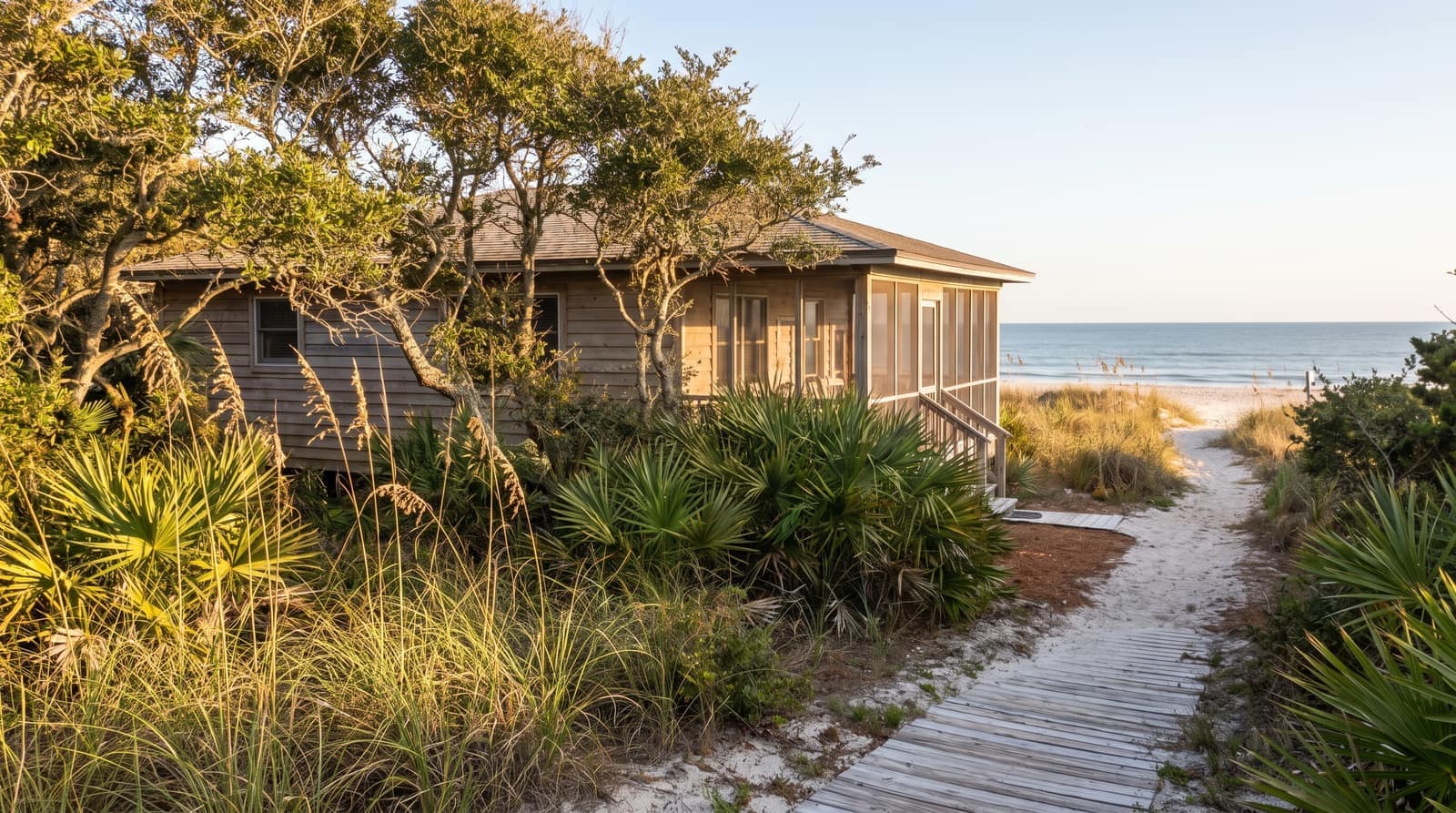 Low-rise homes tucked behind natural dunes set the tone — private, quiet, and close to protected beach.
Neighborhoods and where the homes are
Melbourne Beach and the barrier island stretching south are largely residential and low-density.
Oceanfront holds single-family homes and a limited number of low-rise condos along quiet beaches. Lagoon-front homes on the Indian River side offer docks and calm-water access. Between the two waters, the island's neighborhoods mix older cottages, mid-century homes, and newer custom builds, often on lots that run toward one water or the other. The historic core near the community pier gives the town a small, walkable center. Because the area is built-out and partly protected, the supply of homes is naturally limited.
Property types and what to expect
Expect oceanfront homes, riverfront homes with docks, and a scattering of beach cottages and smaller condos — generally lower-density and more single-family than the towns to the north. Pricing reflects the quiet, desirable character and the limited inventory; a protected, low-rise stretch of coast tends to hold its appeal. As everywhere on the barrier island, which water a home fronts, its elevation, and its exposure drive value far more than averages do.
This guide isn't a brokerage, and prices change constantly, so we won't quote figures. Use the listing links at the bottom of the page for current asking prices, and confirm anything specific with the listing agent or a licensed local professional.
Nature, the lagoon, and the community
Melbourne Beach's recreation is rooted in its surroundings. The Archie Carr refuge and the quiet public beaches draw walkers, swimmers, and turtle-watchers; the Indian River Lagoon is a paddler's and angler's playground; and parks like Spessard Holland (with its beach and golf) and the historic community pier anchor local life. It's a community organized around the outdoors and conservation, with the full services of Melbourne a short drive across the causeway.
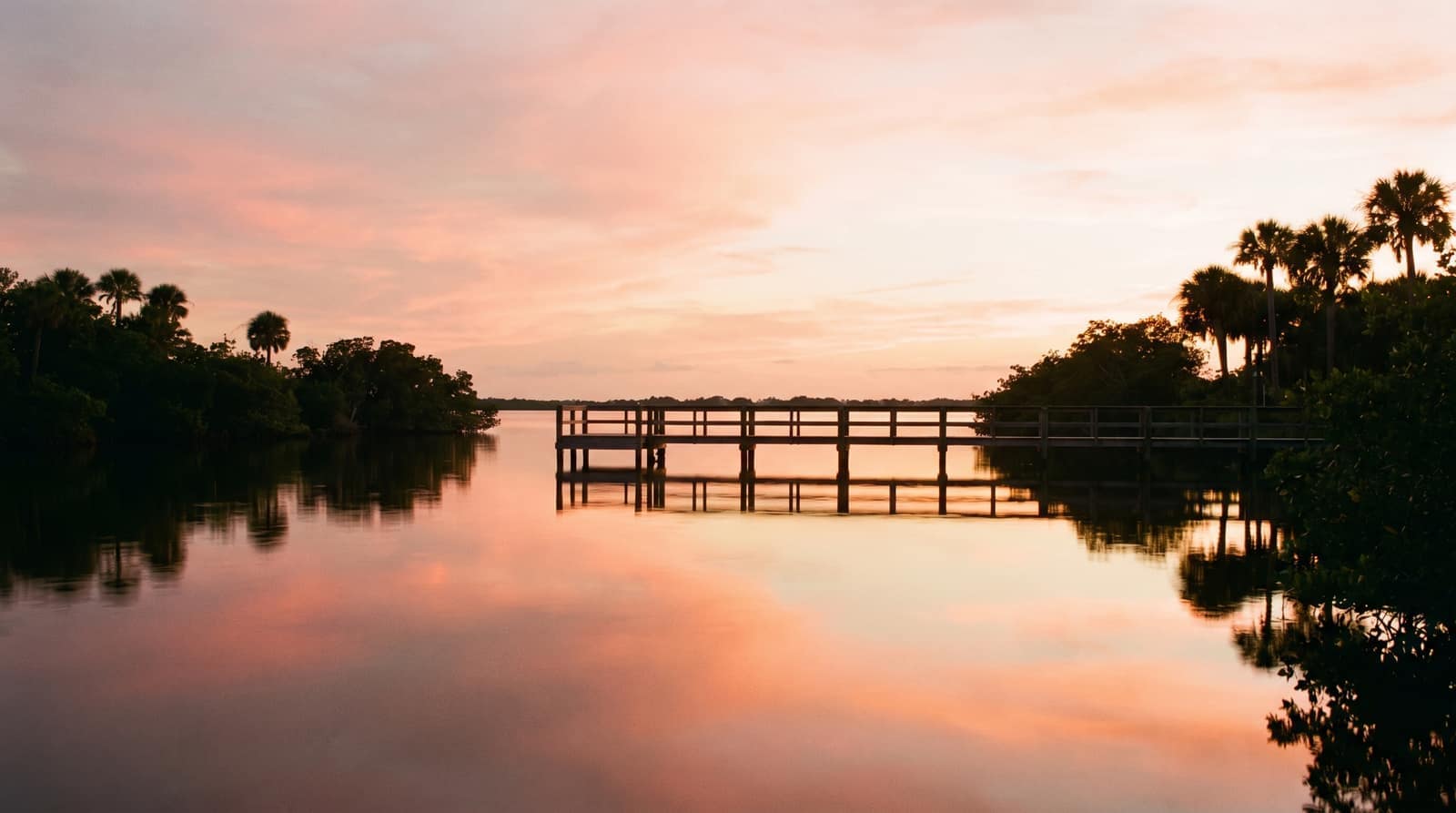 On the west side, the Indian River Lagoon offers calm water, docks, and some of Florida's best inshore fishing.
History and how the town grew
Melbourne Beach is one of the older settlements on this stretch of coast. A community grew up around its historic pier on the lagoon in the late 1800s — long before the barrier island filled in — and that early, walkable core still gives the town a small "Old Town" character near the water. What's most notable about its history, though, is what didn't happen: as the towns to the north embraced high-rises and tourism through the twentieth century, Melbourne Beach deliberately stayed low. Height limits and a conservation-minded ethos kept development modest and the beaches dark and uncrowded, and the long, lightly developed barrier island stretching south toward Sebastian Inlet was steadily protected rather than built up. The result is a town that feels intentionally preserved — a glimpse of what much of the Florida coast looked like before the condo era.
The sea-turtle coast
The defining natural feature here is the sea turtles. The Archie Carr National Wildlife Refuge — named for the pioneering sea-turtle scientist Dr. Archie Carr — protects a stretch of beach centered on this part of the coast that hosts some of the densest loggerhead nesting in the Western Hemisphere, along with significant green and leatherback nesting. Each summer, females haul ashore at night to lay eggs, and weeks later the hatchlings emerge and scramble to the surf. The Barrier Island Sanctuary on A1A serves as the education center for the refuge, with exhibits, trails, and guided nighttime turtle walks in season. This isn't a backdrop detail — it actively shapes life here, from the strict beachfront lighting ordinances to the community's deep conservation identity. For many residents, living amid one of the world's great sea-turtle nesting grounds is a genuine part of the appeal.
On the lagoon: fishing, paddling, and wildlife
The west side of the island faces the Indian River Lagoon, one of the most biodiverse estuaries in North America. For anglers, that means a celebrated inshore fishery — redfish, spotted seatrout, snook, and more — fished from skiffs, kayaks, and docks. For paddlers, the calm, shallow water and mangrove islands make for easy exploration, with manatees, dolphins, and wading birds as regular company. Historic fish camps and small launches along this shore speak to a long tradition of working and playing on the lagoon, and lagoon-front homes with private docks put all of it at the back door. The lagoon's health has had its ups and downs over the years, so current water quality is worth asking about — but as a recreational resource and a daily source of wildlife and quiet, it's central to what makes the lagoon side of Melbourne Beach special.
Parks, the pier, and the small-town core
For all its quiet, Melbourne Beach is rich in places to be outdoors. Spessard Holland offers both a beachfront park and a golf course; Ryckman Park and the historic community pier anchor the walkable town core on the lagoon; and a string of beach access parks and natural areas runs south along the island toward Sebastian Inlet State Park, a renowned spot for surfing and fishing at the island's southern tip. Dining and shopping are modest and local — a handful of casual restaurants, a small plaza or two, and the essentials — with the full amenities of Melbourne a short drive across the causeway. The point of Melbourne Beach was never a bustling commercial strip; it's the beach, the lagoon, the turtles, and the quiet, and the town's amenities are scaled to match.
The rhythm of the year
The seasons here are gentle but distinct. Winter is mild and dry, drawing some seasonal residents and offering the most comfortable beach weather. Summer is hot and humid, with afternoon storms — and the height of sea-turtle nesting season, when beachfront lighting rules are strictly observed and the nightly drama of nesting and hatching unfolds. Hurricane season, June through November, is the period every coastal buyer should plan around, shaping insurance and the occasional need to prepare. Through it all, Melbourne Beach stays quieter than its neighbors, and the shoulder seasons of spring and fall are many residents' favorite time on this stretch of coast.
Who lives here, and the pace of life
Melbourne Beach attracts buyers who are deliberately choosing quiet. Many are year-round residents — families, remote workers, and retirees — drawn by the low-rise calm, the natural setting, and the strong sense of community in a town small enough that the pier, the parks, and a handful of restaurants are the social center. Others are second-home owners who want an uncrowded retreat within reach of Melbourne's airport and amenities. What you won't find much of is the transient, party-driven energy of busier beach towns; the culture here leans toward conservation, the outdoors, and a slower rhythm. That self-selecting community is part of the appeal and part of the trade-off: nightlife and big-box convenience are a drive away, but so is the noise. For buyers who value tranquility, dark beaches, and neighbors who chose the same things, it's exactly right — and worth confirming the fit by spending an evening in town before you commit.
Getting there and day-to-day
Melbourne Beach is roughly an hour and a half from Orlando, reached via Melbourne and I-95, with Melbourne Orlando International Airport just across the lagoon. Everyday shopping, dining, and services come from Melbourne and the nearby beachside communities, which keeps Melbourne Beach quiet while putting amenities within easy reach. It works as a weekend retreat or a full-time home for those who value calm.
Buying a coastal home here: what to check
Coastal buying carries considerations inland lakefront doesn't, with a few local specifics:
- Sea-turtle lighting rules. Beachside homes are subject to lighting ordinances during nesting season. Confirm the rules and how they affect exterior lighting and windows.
- Elevation and dune protection. For oceanfront homes, confirm elevation, dune integrity, and storm history carefully.
- Wind and flood insurance. Get real quotes early; coverage is significant and varies by location and elevation.
- Lagoon docks and water quality. For riverfront homes, confirm dock permits, depth, manatee-zone rules, and be aware that lagoon water quality varies over time. Our waterfront maintenance guide covers the upkeep salt air and water add.
Insurance, storms, and maintenance
Plan for barrier-island realities: wind and flood insurance, salt-air maintenance for roofs, windows, HVAC, docks, and seawalls, and a clear view of hurricane and surge exposure. The trade-off for the quiet and the nature is the same coastal upkeep as anywhere on this shore — budget for it from the start.
Who Melbourne Beach suits
Melbourne Beach rewards buyers who want a quiet, low-rise, nature-forward stretch of coast — beach walkers, anglers, paddlers, and anyone who prefers turtles and empty sand to crowds and nightlife. The two waterfronts mean it works for both ocean lovers and lagoon boaters; just be ready for limited inventory and a patient search.
As always, the details that matter most — exact frontage, elevation, lighting and dune rules, dock and lagoon access, insurance costs, condition, price, and availability — are specific to each home and change quickly. Use the links below to see what's currently on the market, and verify everything with the listing agent, broker, or another licensed professional before you rely on it.
Browse Melbourne Beach listings
Search current waterfront homes on these third-party sites:
Links go to external sites. Lakeshore & Coast is not a brokerage — confirm all details with the listing agent or broker.
Melbourne Beach: common questions
What makes Melbourne Beach distinct?
It's quieter and lower-rise than the towns to the north, with uncrowded beaches and a stretch of coast that's one of the most important sea-turtle nesting areas in the country, anchored by the Archie Carr National Wildlife Refuge. The vibe is residential and nature-forward rather than resort-like.
Are there riverfront homes too?
Yes. The barrier island sits between the Atlantic and the Indian River Lagoon, so riverfront homes with docks are available alongside oceanfront properties. The lagoon side offers calm water and excellent inshore fishing.
What are the sea-turtle lighting rules?
Along this coast, ordinances limit artificial light visible from the beach during nesting season to protect sea turtles, affecting exterior lighting and window treatments on beachside homes. It's a manageable but real consideration — confirm the local rules for any oceanfront property.
Is inventory limited here?
It can be. The low-density, largely built-out, partly protected character of the area means fewer homes come to market than in the busier towns north, so patience and a clear sense of what you want help.
Important. Lakeshore & Coast is an independent editorial and curation website. We are not a licensed real estate brokerage, we do not represent buyers or sellers, and we do not provide MLS or IDX access. Property information may come from public sources, partner submissions, embedded widgets, videos, or outbound listing links and may be incomplete or out of date. Always verify price, availability, property details, HOA rules, waterfront access, insurance requirements, and legal matters with the listing broker, agent, seller, public records, or another qualified professional. Some links may be sponsored or earn a referral fee.